«Craving for solidarity amidst despair…»

This image shows the first few paragraphs of an intriguing essay on Erskine Caldwell’s reception in the Soviet Union. It was featured in Soviet Literature Monthly, a multilingual literary journal published by the USSR from the mid-‘40s until the country’s dissolution. The article describes how Caldwell’s first book in Russian sold its first edition quickly, which is remarkable considering Soviet print runs during the 1930s numbered in the millions.

According to the review, Caldwell’s appeal lies in his portrayal of the downtrodden of American society (“Negroes, farmers and city slum dwellers”) but also in its quintessential settings like the “American backwoods,” its folkloric depictions, and, more importantly, the stories’ “surprising (…) affinity to Russian writings in denouncing stagnation, greed and spiritual emptiness.”

In other words, social realism.

Other Soviet critics saw a kinship between Caldwell’s fiction and their country’s own literature in the “moral makeup” of his protagonists as well as in the writer’s humor, which did not get lost in translation. To the author of this essay, however, there is also a properly political connection to be found in Caldwell’s work, which he considers “genuine art” and “undoubtedly Leftist” given the aesthetic approach to its milieu, supposedly based on “first-hand experience of hopeless poverty” and the “loss of the self and the craving for solidarity amidst despair” (ie. alienation in a capitalist society.)

All of the above reminds me that what I find the most fascinating and appealing about the U.S. is precisely the more authentic manifestations of its culture, the ones that are rooted in the land or in its social dynamics. This likely holds true for millions of people around the world who for generations have read authors like Hemingway or Faulkner, enjoyed America’s artistic production, or simply been lured by that part of the country that is not normally reflected in its cultural and political exports but which is where many foreigners find a commonality with their own experience.

Interventionism, foreign aid with strings attached, a Wilsonian desire to shape other societies into the U.S.’s own image, sanctimonious and selective promotion of human rights, a propagandized and artificial notion of a distinct type of “freedom” the rest of the world can only yearn for and which can be found solely in America, all of this generates considerably less kinship, if not downright hostility and suspicion, among those societies supposedly benefitted by Washington’s dictates and its colonial humanitarianism.  

I have noticed before that when I read Appalachian literature and especially that which deals with coal mining culture and historical episodes forgotten by the cultural mainstream like the West Virginia Mine Wars, I am reminded of the coal mining novels of Chilean writers like Baldomero Lillo or Juan Marín, or testimonies like Domitila Barrios de Chungara’s Let Me Speak!, the memoir of a union activist in the mines of Bolivia. U.S. regional literature is perhaps one of the last holdouts for social fiction and it’s no coincidence that it emanates from parts of the country where socioeconomic problems are more acute or at least less present in the mainstream news cycle save for the occasional environmental catastrophe or a transient media desire to profile voters during electoral season. This is likely why this literature often touches on social issues in a more straightforward way than what one normally finds in the literary mainstream, even if, like most American writers, regional authors judiciously avoid anything that could be construed as didacticism. This might also be the reason why the Soviet Literature reviewer saw something in Erskine Caldwell’s fiction that American critics and writers rarely see in a homegrown author, even when it’s there.

Publicado en Escritores | Etiquetado , | Deja un comentario

You sound like a Wikipedia entry

It’s rare that a well-written negative review of a novel makes me even more curious about said novel. After reading this, I want to read Rachel Kushner’s Creation Lake, not to see if what Taylor states is accurate but because the novel he describes seems interesting. A lot of the problems he points out in Kushner’s work, such as a disjointed timeline, I don’t consider weaknesses unless they are poorly executed. The only way to see if I agree with this argument is to read the novel myself, something I think most people who reacted to this review didn’t do.

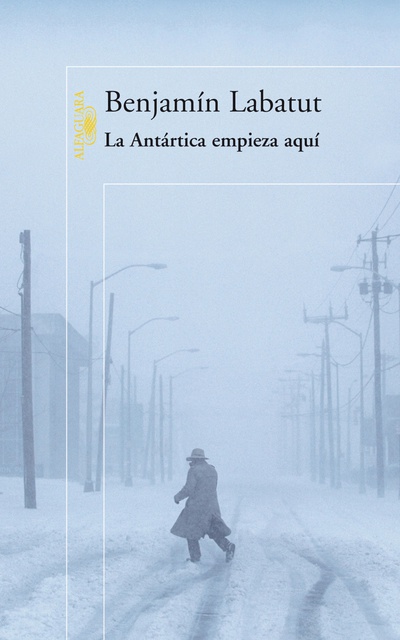
The “you sound like a Wikipedia entry” argument has become common when panning modern novels where authorial erudition or arcane knowledge seems to be an integral part of the story. I remember that Benjamín Labatut’s second book, Después de la luz (After the Light), was poorly reviewed by a Chilean critic precisely because of an allegedly clunky weaving of Wikipedia factoids into a supposedly weak structure. I haven’t read it myself but I’ve read Labatut’s first short story collection, La Antártica empieza aquí (Antartica Starts Here) – which is very good but far more conventional in terms of narrative structure than his later work – along with his third book.

I believe what Kushner does is different and I’d have liked to see more examples in Taylor’s review of these supposedly Wikipediaist digressions and how they work in Creation Lake. It quotes from Kushner’s novel extensively but I think the main flaws he points out are not documented or exemplified sufficiently, a feature that has nothing to do with the review’s length but with the passages he picked.

“Why did you even write this?” as Taylor states, is refreshingly blunt for a review but I believe your argument needs to be more convincing if that is your judgment of someone’s work. Another fascinating response to Taylor addresses some of the review’s faults, but ultimately goes on a tangent about depicting reality through “radical equality” as exemplified by Pisanello’s paintings that I don’t believe analyzes the alleged flaws in Kushner’s own depiction of the world.

I liked Kushner’s The Mars Room and I enjoyed the articles in The Hard Crowd, especially the one about Italian author Nanni Balestrini. There are more tangential points in Taylor’s review that indeed point to flaws such as deadened descriptions of the landscape, a problem with too many contemporary writers, I suspect, who have zero familiarity with nature beyond hiking or occasional trips out of town (and I’m not saying Kushner is one of them.) It also strains credulity that a leftist commune in France would need a translator and that a spy could infiltrate it under such pretense. On the other hand, passages like the digression on kerosene and lice or job interviews and the fake toughness of certain academics sound intriguing. More importantly, a novel about a cynical spy infiltrating a commune by a good writer like Kushner is something that will always pique my interest.

Publicado en Escritores | Deja un comentario

Nuevo cuento en L’Inquieto

Mi cuento «Átomos» aparece en el nuevo número de la revista italiana L’Inquieto.

Portada
Publicado en Escritores | Deja un comentario

Reseña en Literando

Reseña aparecida en el sitio Literando.

Publicado en Escritores | Deja un comentario

Entrevista en Crash Boom Bang

El periodista Juan Carlos Ramírez me entrevistó para su podcast Crash Boom Bang, donde conversa con filósofos, periodistas, escritores sobre la pandemia y otros temas.

Image for post

Publicado en Escritores | Deja un comentario

Nueva reseña

Reseña aparecida en el sitio Hola Cultura (Washington, DC).

Portadas


Publicado en Escritores | Deja un comentario

Escritores entre dos lenguas

Video de la mesa redonda Escritores entre dos lenguas: Escribir en español en Estados Unidos hoy, encuentro que tuvo lugar en Madrid el 28 de mayo pasado.

Image may contain: text

Publicado en Escritores | Deja un comentario

Cuento en Goliad Review

Goliad 1.2

Mi cuento «Me dejó por Jesucristo» aparece traducido al inglés por Joseph Haske en el último número de Goliad Review.

Publicado en Escritores | Deja un comentario

1st Annual Goliad Literature Festival

Festival+FLyer+2

Publicado en Escritores | Deja un comentario

Reseña de Country Dark, de Chris Offutt

Reseña de la nueva novela de Chris Offutt, Country Dark, en la edición de agosto de The Observer.


Publicado en Escritores | Deja un comentario